
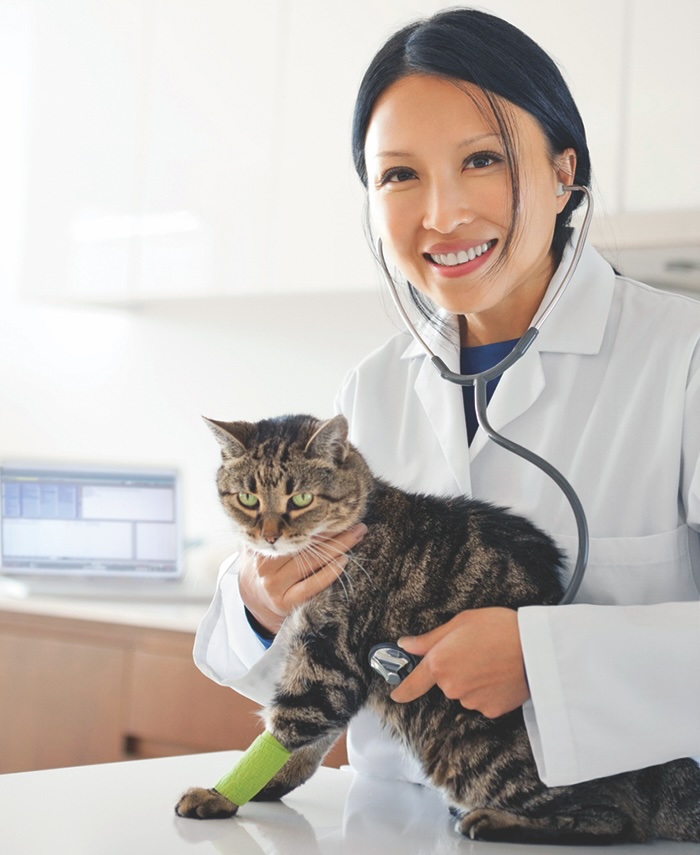
Just as in humans, as your cat ages, so does the likelihood of an age-related disease rearing its ugly head. Cats are considered seniors at 10 years of age. At that point, a twice annual wellness visit with your veterinarian can be money well spent in catching problems early. Among the changes that may occur as your cat ages are:
- Weakened immune systems
- Kidney disease
- Hyperthyroidism
- Thinner skin
- Brittle nails
- Arthritis
Never assume that changes you see in an older cat are benign, as it is always best to catch diseases early. Contact your veterinarian about your cat if you see any of these symptoms or signs of possible illness, including:
- Diarrhea that lasts more than two days
- Increased thirst and/or urination
- Vomiting that lasts for more than one day
- Increased respiratory rate/effort
- Blood in urine or stool
- Changes in activity level
- Hiding in unusual places
- Appetite changes
- Unkempt appearance
- Unsteady gait
- Weakness/collapse
- Weight loss
- Greenish/yellowish discharge from the nose or the eyes
- Inability to urinate or painful urination (straining)
We all want our cats to live forever, but the best we can do is monitor them. Knowing your cat is now considered a senior means watching for signs of medical or behavioral changes that may benefit from veterinary medicine. We all want to keep them happy, healthy, and with us as long as possible.


