
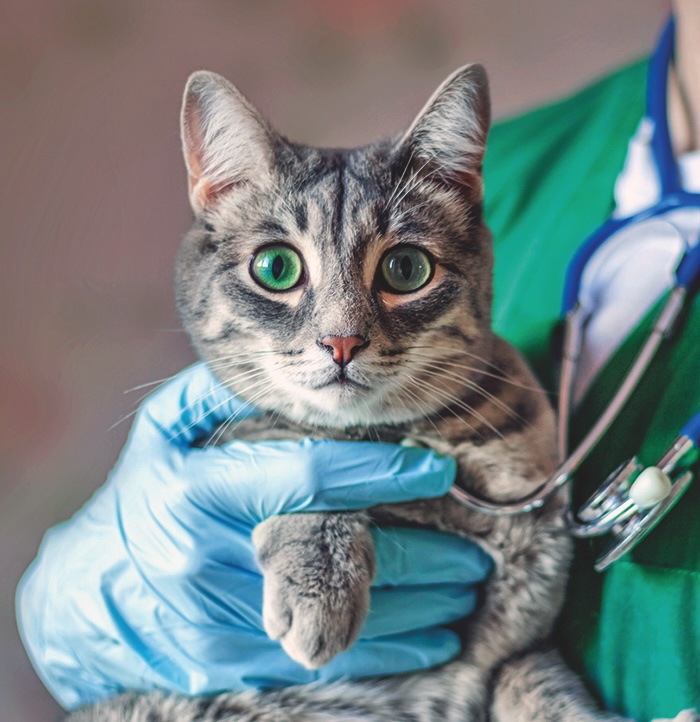
Having a sick cat is stressful. This can be even worse when the reason for a sick cat’s illness is not immediately clear. It can be frustrating when your veterinarian does not have all the answers. But this is normal, and it does not mean your veterinarian is incompetent.
“I think it is totally OK for a vet to say, ‘I don’t know,’” says James Flanders, DVM, DACVS, Emeritus Associate Professor in the section of small animal surgery at Cornell University’s College of Veterinary Medicine. “This is vastly superior to the alternative of fabricating a diagnosis just to avoid the appearance of a lack of knowledge. No veterinarian knows everything about everything!”
Why Things Get Uncertain
Cats are biological organisms, and organisms can be variable. While a car is assembled with standardized parts in a standardized way, a cat is assembled from unique genetic material under unique conditions. No two cats are the same. How a cat uses her body, what she eats, her personality, her genetic makeup, and how she processes medications all impact which injuries and illnesses she might develop and how she will respond to treatment.
Diseases can be variable as well. Viruses and bacteria change and evolve over time, developing strains that may cause different symptoms and/or respond to different treatments. Genetic conditions can vary in severity, and many illnesses and injuries have the same symptoms, especially in a species like cats who prefer to hide any signs of weakness. Health conditions are also usually complex and may impact multiple parts of the body in a variety of ways rather than being a single isolated issue.
If your cat is unlucky enough to have multiple problems at the same time, it can take a while to parse out which symptoms are caused by which conditions. The veterinarian will also have to balance the pros and cons of medications and treatments that may contradict or interfere with each other.
Patience Is Key
No veterinarian has a crystal ball that will tell them exactly what is wrong with your cat. Instead, she has knowledge of anatomy and behavior, bloodwork, urine analyzers, and imaging tools (X-rays and ultrasound for most general practitioners). Acquiring these diagnostics will require your permission and each will give clues as to what is going on with a feline patient.
An unfortunate reality is that veterinary appointment time slots are usually relatively short. If initial diagnostics do not provide a clear answer, your veterinarian may start treating your cat’s symptoms presumptively to provide some relief while she reviews test results and consults with colleagues and published literature to solve a cat’s diagnostic puzzle. In some cases, response to therapy may provide valuable information.
Second Opinions and Referrals
Many complicated or unusual cases benefit from either a second opinion or a referral. This may be to a veterinary specialist or to another general practitioner (GP).
“If the veterinarian feels that a colleague with more experience or a specialist veterinarian might be more appropriate, then they can recommend a referral,” says Dr. Flanders.
“This shows that the veterinarian wants to provide the best care for the pet, and I think it reflects very well on the veterinarian. Referrals don’t always need to go to a specialist. Many GPs have special interests such as exotic pets or reproduction for example, and they may obtain an enhanced level of knowledge in the area through continuing education and increased experience over time. Such a GP would be a very good option for referral,” says Dr. Flanders.
Your veterinarian will pass on all records and previous test results for the other veterinarian to review, and both veterinarians can work together to manage your cat’s care. For example, you may travel several hours for your cat to be seen by an internal medicine specialist for IBD but then have monitoring bloodwork done through your general practitioner closer to home.
Your veterinarian may recommend a second opinion, or you can seek one out on your own to get another set of eyes on your cat’s case.
Once again, it is helpful to ensure that all records and test results are shared between the two facilities so that you don’t have to pay for repeat testing and your cat’s entire care team has a full picture of his clinical status.


