
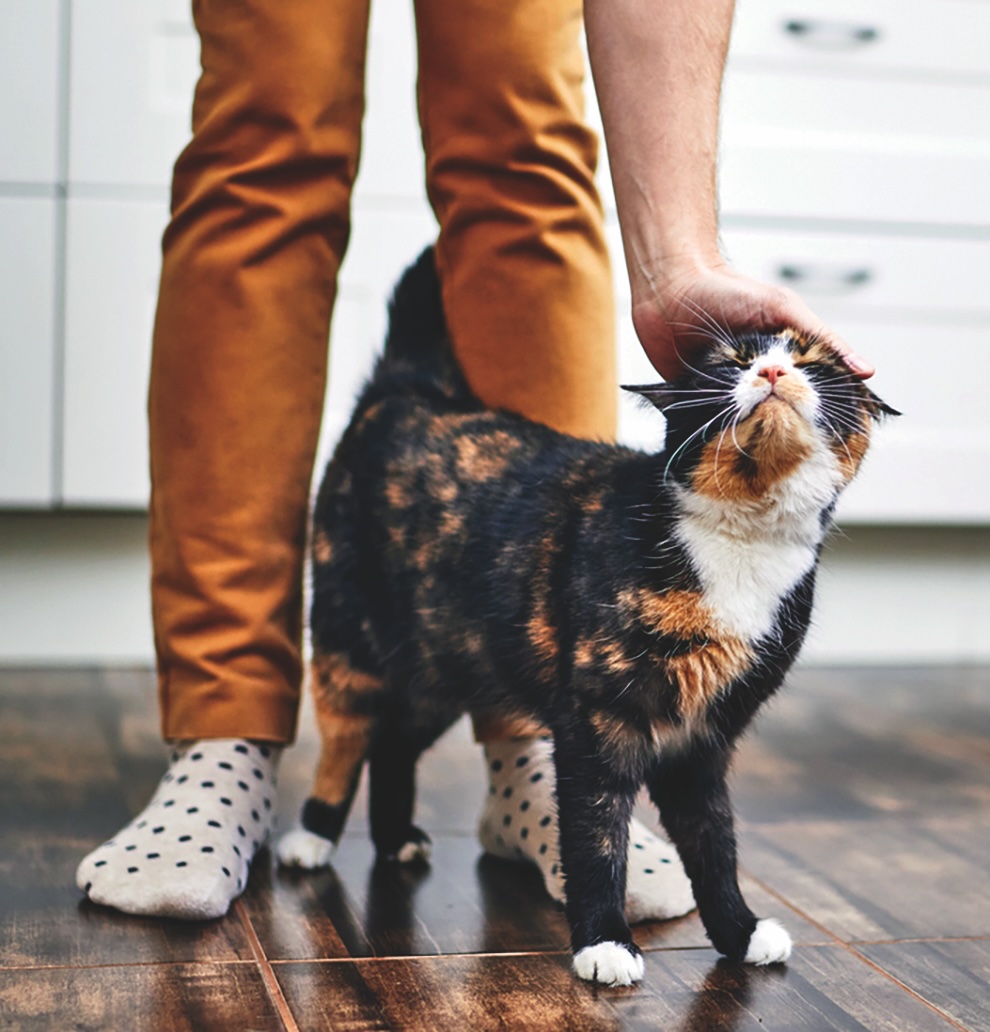
The bond between humans and cats is often a quiet but strong one. This bond provides benefits for both parties and allows you to pick up subtle changes in your cat’s health and behavior. Mutual trust is also helpful when a cat requires hands-on care or medications.
Building a Bond
As with any relationship, building a strong bond between you and your cat takes time. “Be the source of all good resources,” says Pamela J. Perry, DVM, PhD, board-certified veterinary behaviorist for the Camuti Consultation Service at the Cornell Feline Health Center. Dish out your cat’s meals yourself or be nearby when an automatic feeder goes off. Give your cat toys and safe household items to play with, and create cozy resting and hiding places near where you spend your time.
“In addition, do not force your kitty to interact with you; rather, let her be the one to take the initiative,” says Dr. Perry. “Some cats have a limited tolerance for time together with us, so do not overstep the boundaries—keep the interaction time short and sweet. Most of all, be patient with your new kitty so that she learns to trust you.”
Some cats are naturally gregarious and seek out physical contact frequently and enthusiastically. Other cats may enjoy human interaction but not a lot of physical contact. Still others may seem to quietly coexist with you in your home but tend to be in the room with you or in a neighboring room where they can keep tabs on your activities. All these personalities can and will bond with a human caretaker.
As you get a feel for your cat’s personality and preferences, meet him where he is and lean into the things he enjoys. If your cat enjoys ear rubs or long strokes down his back, try to do this at least once a day. If he gets really excited for treats, dole out small tidbits occasionally. Talk to him and acknowledge him when he meows or chirps at you. If he is shy, spend some time each day doing a quiet activity such as reading or working while in his presence, so he becomes accustomed to your sight and scent and learns that you are not a threat.
Many cats enjoy activities such as training or going for walks on a leash and harness. Keep training sessions short and choose a reward that your cat really enjoys. Rewards might be small meaty treats, tossing kibbles, playing, or petting, depending on your cat’s preferences. To take your cat for walks, start by gradually desensitizing him to wearing a harness and then attach the leash and follow him around your house. Once your cat is comfortable with the leash and harness, you can start taking small trips outside together, gradually building up duration over time.
Does My Cat Love Me?
Cats show their attachment to us in many ways. “Cats who are attached to their humans will solicit attention from them by approaching them, often with a tail held straight up, meowing or pawing at them, etc.,” says Dr. Perry. “They also tend to ‘follow’ their owners from room to room, albeit sometimes at a distance. Purring and head rubbing or bunting you are other signs that your kitty enjoys your presence. In addition, many cat owners cherish the ‘slow blink,’ during which a cat stares at you and slowly squints or closes her eyes as a sign of affection.”
Some cats will show all these behaviors toward their person or people of choice, while others will just exhibit a few. Pay attention to how your cat acts toward you to figure out his “love language.” Even if your cat doesn’t like to sit in your lap or right next to you, he may seek out your clothing or pillow.
Cats often stick to a schedule. You may notice that your cat seeks you out to sit in your lap midafternoon, or that he often wants to cuddle in the evening after dinner. By the same token, there may be times of day that he prefers to do solo activities, such as bird watching out a window or napping in a quiet room away from the rest of the family.
Cat-Human Bond in Action
Both you and your cat benefit from this relationship. Studies have shown that having a cat decreases loneliness and stress and that petting a cat can lower your blood pressure. Interacting with your cat stimulates the release of oxytocin, the bonding hormone (and this goes both ways!).
Cats who form secure attachments to their people tend to be happier, less stressed, and more resilient. Interacting with human caretakers on a regular basis provides enrichment, keeping the cat mentally engaged and preventing negative behaviors that stem from boredom.
On the practical side, cats benefit from bonding with us by receiving food, shelter, and other resources. But they also benefit from our attention. Humans who are attached to their cats are more likely to spend time with them and will notice changes that could indicate an injury or other health problem.
Veterinary Benefits
The cat-human bond is beneficial to veterinarians in many ways.
First, an owner who cares about his or her cat is more likely to notice subtle changes promptly. You know your cat and his routines best. If your cat loses weight, doesn’t seem as interested in eating, stops playing, develops a limp, or starts hiding more often than usual, he may have a health problem that requires veterinary intervention. These observations are extremely helpful for your veterinarian, because our stoic felines often hide signs of pain or illness when in the presence of strangers or in a foreign environment.
Second, a cat who is accustomed to being handled is generally easier to examine. If your cat is already familiar with being physically manipulated by you, these same motions will be a bit less alarming when done by a stranger. Individual personality does still come into play here, as some cats absolutely do not want to be touched by a stranger. But a cat who has been socialized will usually be easier to work with than a feral cat who was not socialized as a kitten.
Third, you provide emotional support for your cat in the exam room. Veterinary clinics are stressful for almost all cats. They smell weird, the cat is usually in an open space without the option to hide, and there are unfamiliar people and animals within sight and earshot. But if your cat is attached to you, your presence provides a lifeline of familiarity and comfort that can make the experience less terrifying.
Fourth, trust improves compliance with treatment. Cats who trust their owners are more likely to accept home care such as grooming, being given medications, or receiving fluids under the skin. Training and positive reinforcement will help for all these things, but that relationship of mutual trust is critical. Your cat may not enjoy getting insulin injections for his diabetes, but if he is comfortable being held by you and knows that you will reward him with a favorite treat afterward, it will quickly become part of your routine.
Your Knowledge Matters
Your experience with your cat and familiarity with his preferences can be helpful if your cat needs to be hospitalized.
For example, if your cat prefers to have company while he eats, a staff member can sit with him and pet him while he munches. If he is used to eating in a quiet space, the staff can cover his kennel to give him privacy during meals. Let the veterinary team know if there are flavors or textures of food that your cat usually enjoys.
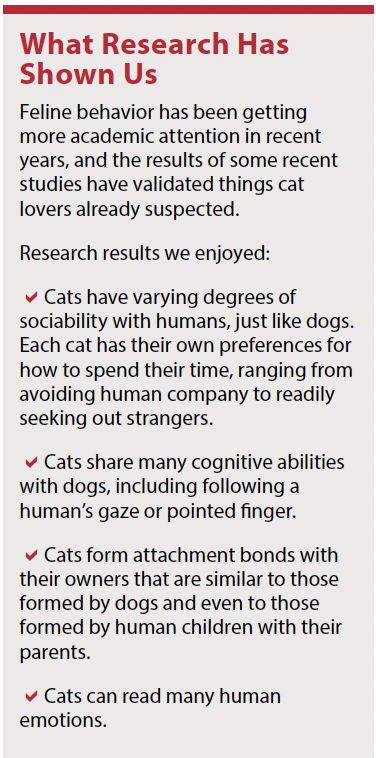
If your cat enjoys being petted or scratched in a particular way, the veterinary team can do this for your cat both during casual check-ins or to make injections and other care less stressful. By the same token, if your cat strongly dislikes being touched or handled in a particular way, let the staff know to avoid that.
Your bond with your cat is beneficial to both of you, and those effects hold up even when you are apart. Cherish every moment with your kitty and know that the time you invest into building your bond together is well spent.
Signs of Feline Affection:
- Rubbing
- Head bunting
- Approaching or seeking proximity
- Meowing to solicit attention
- Purring
- Following from room to room
- Slow blink when making eye contact
- Grooming


