

Upper respiratory infections (URIs) can flourish in groups of cats. Feral colonies, shelters, catteries, multi-cat households, and foster homes are prime sites for these infections. Cats in these settings are often in close contact and often stressed, which can suppress their immune systems and make them more susceptible to infections.
Viral URIs caused by herpesvirus and calicivirus often account for mild signs such as conjunctivitis (tearing, redness) and clear nasal discharge. Combined viral and bacterial URIs tend to cause more severe signs, including pronounced sneezing and mucoid (thickened) nasal discharge.
“I like to think about respiratory illness by dividing it into problems in the upper (nose, pharynx) and lower (trachea, lungs) regions,” says Michael Merkhassine, DVM, DACVIM, Assistant Clinical Professor of Small Animal Medicine at Cornell University’s College of Veterinary Medicine. In general, upper airway respiratory illnesses tend to be milder, while those in the lower respiratory tract are often more severe.
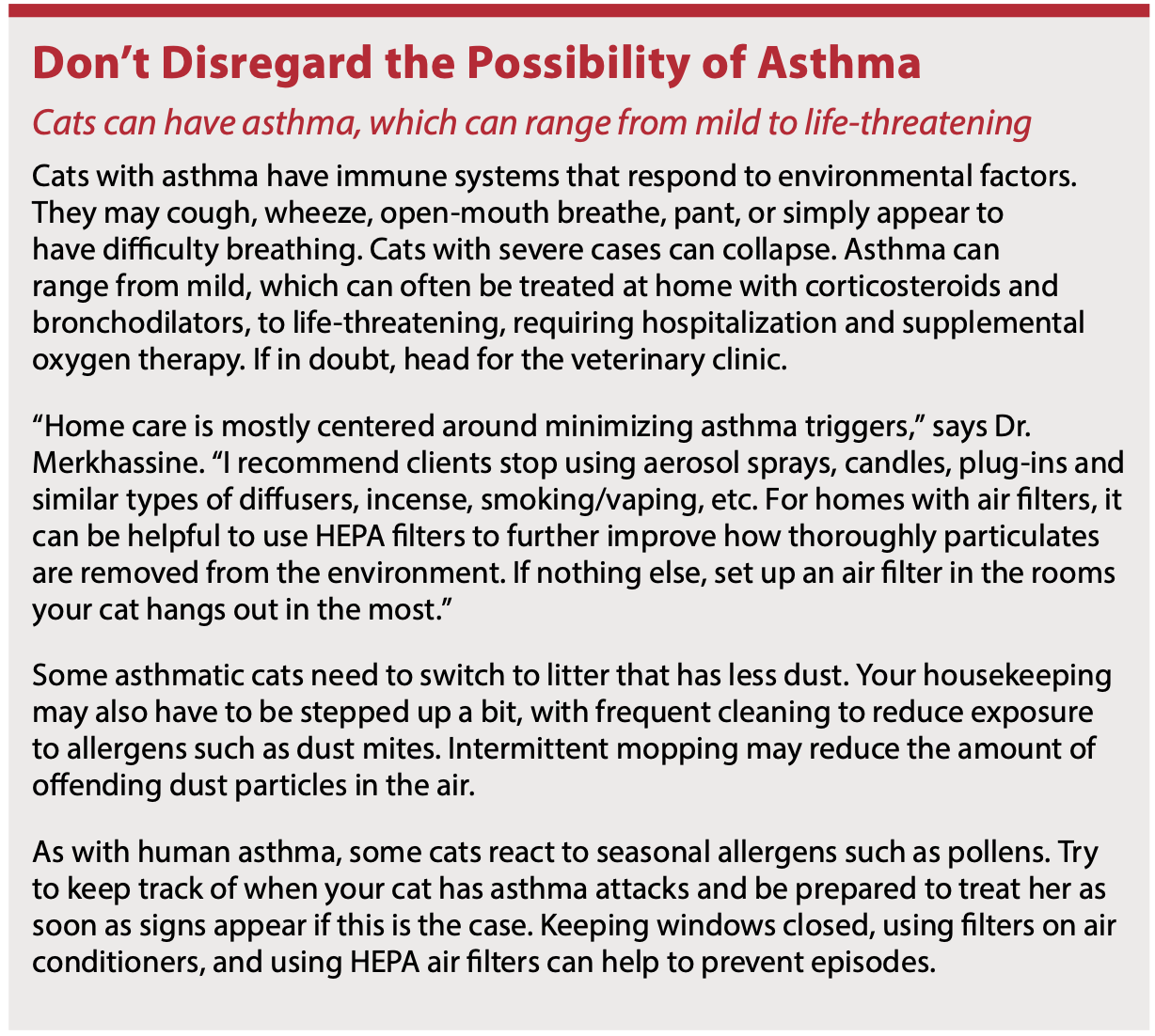
Clinical signs of lower respiratory illnesses like pneumonia (viral, bacterial, or fungal infection of the lung tissue involved in the exchange of oxygen and carbon dioxide) and asthma (allergy-mediated inflammation of the airways leading to the above-mentioned lung tissue) can vary but increased respiratory rate (above 40 breaths per minute) and effort are commonly seen.
Cats suffering from pneumonia often have a fever and may exhibit nasal discharge, coughing, and open mouth breathing. Cats with asthma do not commonly have fevers, but they may cough, wheeze, and open mouth breathe. Many cats with lower respiratory disease have poor appetites and are lethargic.
Any cats showing signs of increased respiratory rate and/or effort should be seen by a veterinarian immediately, as such respiratory distress constitutes a medical emergency.
Contagious Pathogens
The pathogens that cause respiratory illness tend to be highly contagious. They are spread via droplets (such as from sneezing), saliva, and ocular and nasal discharges that may end up on food or water bowls, bedding, or toys. Most feline respiratory pathogens don’t survive long in the environment, so cat-to-cat transmission is the most common.
Feline herpes and calicivirus are the most common viral causes of feline respiratory illness. Feline viral rhinotracheitis (FVR), a herpes virus, is ubiquitous, and almost all cats are exposed at some point. Up to 80% of exposed cats will have lifetime infections, though many may not show signs of illness. Up to 50% of them may shed viruses when stressed, however, which can perpetuate illness in an affected group of cats.
Feline calicivirus (FCV) can survive longer than FVR in the environment (up to one month), but it is primarily spread from cat-to-cat rather than via environmental exposure. Both FCV and FVR tend to cause ocular and nasal discharges that often start clear but become more yellow greenish with time, commonly due to secondary bacterial infections.
Corneal ulcers are more common with FVR, while FCV is known to cause oral ulcers in many cats it infects. Some cats, particularly young ones, may show lameness with calicivirus infections, and in rare cases, a mutation of FCV may lead to a syndrome called severe systemic disease that causes potentially lethal multiple organ failure.
Cats are susceptible to highly pathologic avian influenza, showing neurological signs when infected (most cases are fatal).
Many upper respiratory infections are caused by more than one pathogen. Common culprits include the above-mentioned viruses and a variety of bacterial species, including chlamydia, mycoplasma, and Bordetella.
Getting a Diagnosis
Diagnosis of feline respiratory disease involves a careful history, physical exam, X-rays, bloodwork, and sometimes bronchoscopy or a tracheal wash. In some cases, more advanced testing, including the use of ultrasound and/or other modalities like a CAT scan and/or MRI may be recommended to rule out other causes of respiratory distress, including heart disease, pleural fluid (fluid around the lungs within the thoracic cavity) and/or cancer.
A definitive diagnosis of the causative organisms/mechanism of contagious and allergic respiratory distress requires microscopic examination and/or molecular biologic testing (i.e., polymerase chain reaction) of samples taken from eyes, nose, trachea, and sometimes from the lower respiratory tract. In some cases, treatment may be instituted based upon a well-informed presumptive diagnosis without identification of causative organisms and/or allergic conditions that may contribute to respiratory disease in cats.
Treatments
The treatment of respiratory disease in cats depends upon its cause, and may include antibiotics for bacterial infections, antiviral drugs for virally mediated upper respiratory disease (i.e., corneal ulcers caused by FVR infections), anti-inflammatory drugs, and/or bronchodilators for feline asthma, and in some cases, supplementation with lysine for FVR infections, although this is controversial.
Hospitalization and oxygen therapy may be required to stabilize severely affected patients.
At-Home Care
Much of treatment for feline respiratory infections centers around nursing care at home. Mild cases are often managed at home. Be sure you keep the cat’s eyes and nose free of debris. A warm compress can loosen crusts. Nebulizing can be helpful and simple: Just keep her in the bathroom while you shower. Setting up a humidifier in the “sick room” can also help.
Your cat’s sense of smell is often diminished during a respiratory infection. Since cats depend heavily on smell for their appetite, keeping the nose clean is doubly important. It also means you may need to try fragrant foods. Juice from a can of tuna or plain sardines can add some odor to your cat’s regular diet. Warming canned food also makes it smellier and can stimulate appetite. Your veterinarian may prescribe appetite stimulants as well.
Water intake is important. Encourage drinking by providing flavored low-sodium broth or water flavored with some tuna juice. Make sure that fresh, clean water is also always available.
Prevention
Preventing upper respiratory infections is easier and less expensive than having to treat sick cats. There are excellent vaccines for FVR and FCV that are usually combined with feline panleukopenia in a three-way vaccine. Kittens need a couple of doses to establish immunity, initially given intermittently until 16 weeks old.
Adult cats then generally get boosters every three years. Herpes and calicivirus vaccines are designated core vaccines by the American Animal Hospital Association (AAHA), which means they are recommended for all cats.
If you foster kittens or cats, set up an isolation or quarantine area in your house with a solid barrier such as a door to separate cats. Separate ventilation systems would be ideal but are not always practical. Follow good hygiene with food preparation and cleaning food and water bowls. Wash bedding and toys in hot water and a mild bleach solution.


