
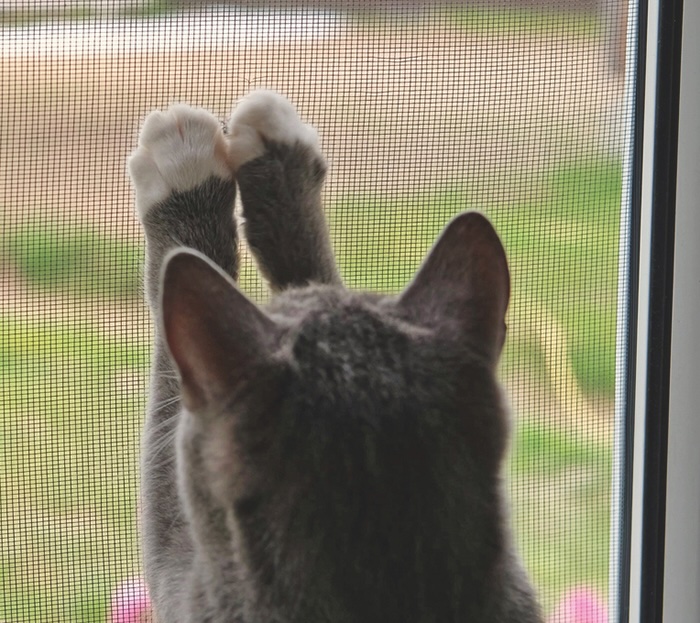
Q: My cat gets horrible reactions to mosquito bites that develop into open draining sores from all his scratching. Topical hydrocortisone ointment helps, but once my veterinarian needed to prescribe steroids. The insects seem to get through the catio screening (my cat loves being out in the catio!). What can I do to prevent problems?
A: Thanks for getting in touch, and I’m very sorry to hear that your kitty has experienced this problem.
Mosquitoes aren’t just a nuisance in causing these reactions. They can also transmit other harmful diseases such as heartworm disease. Please please consider discussing heartworm preventative with your veterinarian.
The reactions you’re describing are called hypersensitivity reactions, allergic responses caused by extreme activation of the immune system to mosquito saliva, an allergen.
A cat’s immune system works by first identifying an invading allergen and then initiating an inflammatory response that ultimately neutralizes them.
This response is mediated largely by white blood cells that make antibodies to the invaders and release chemicals that cause an increase in blood flow and swelling. These chemicals also recruit other cells to the affected area, some of which are involved with the chemical destruction of the invading organisms (allergen).
While this system is an amazing means of protection, it can go awry, a condition that is commonly referred to as an allergy. In this case, the allergic response is directed against the mosquitoes’ saliva, and the swelling and itchiness causes your cat to scratch, which can damage his skin and fur and lead to secondary skin infections.
Of course, the most effective way of preventing these reactions is to avoid the thing that causes them, in this case, mosquitoes. For this reason, anything that you can do to decrease exposure to mosquitoes, including making sure there is no standing water on your property, putting up bat houses to attract these mosquito-eating machines, and the use of mosquito traps would be beneficial.
If these are not sufficient and your cat’s hypersensitivity becomes difficult to control, it may be reasonable to consider keeping him indoors. The treatment of these reactions usually involves the use of some combination of corticosteroids and antihistamines, preferably topically, but in some cases systemic forms (injections, pills) may be necessary.
Systemic corticosteroids can be effective in eliminating itch, but they carry the risk of some side effects, including diabetes mellitus and increased susceptibility to infections. If secondary bacterial skin infections develop, the use of antibiotics may be necessary.
I hope that this is helpful, and please discuss these issues with your veterinarian. I think it’s wonderful that you provide your kitty with a safe, happy outdoor experience.


