
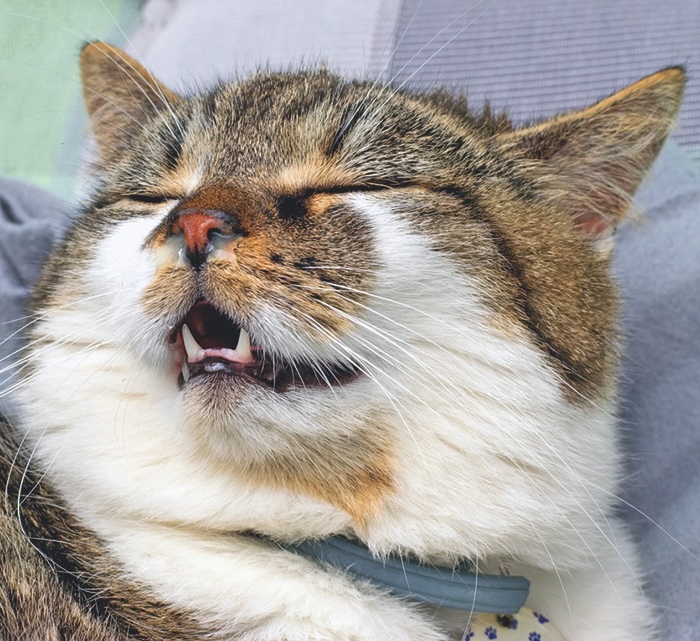
An isolated sneeze or two from your cat is rarely anything to be concerned about. Your cat may have sniffed something that tickles her nasal mucosa or stuck her head into a dusty place under the sofa. Repeated sneezing, however, especially if associated with other clinical signs, is a cause for concern. Your cat may show signs of difficulty eating and drinking normally.
Upper Respiratory Infections
Upper respiratory infections such as those caused by feline herpes virus often cause sneezing. Sneezing from viral infections is generally associated with some ocular or nasal discharge, which might be clear and easy to miss. A loss of appetite is common.
Herpesvirus infections are typically life-long, although symptoms often wax and wane over time. With this virus, your cat may become ill, recover, and be fine for years. If she gets stressed out later in life, though, symptoms can reappear.
Secondary bacterial infections may exacerbate sneezing, and the ocular and nasal discharges associated with these secondary infections may change to purulent (yellow/greenish) in appearance. Nasal fungal infections can also cause sneezing but are less common.
Non-Infectious Causes
Any inhaled foreign bodies can lead to heavy sneezing, sometimes even with a bloody discharge. Your cat may have inhaled some plant material if she was outside or even a small pill or bead dropped on the floor inside. These bouts of sneezing tend to be acute onset and quite powerful as your cat tries to remove the offending objects from her nose. She may even paw at her muzzle or rub her face.
Inhaled Irritants: Cleaning products with strong scents or ingredients like bleach may cause sneezing and ocular discharge. Sometimes cats will sneeze when they encounter blankets washed with strongly scented detergent or dried with scented dryer sheets. Deodorant sprays used during cleaning may incite a sneezing fit. Some cats will sneeze in response to cigarette smoke (secondhand smoke is unhealthy for them in many ways).
Pollen: Pollen blowing in through open windows during the spring or fall may cause seasonal sneezing, along with signs of allergies.
Dental Disease: Sneezing from a dental problem often includes blood or purulent nasal discharge. Feline tooth roots from the upper jaw extend almost into the nasal passageways. If your cat has tooth resorption or an abscess, a channel may open from the mouth to the nasal cavity. Cats with dental disease often have visible tartar and plaque or inflammation and may avoid eating.
Tumors and Polyps: Nasal and sinus tumors are potential, but rare, causes of sneezing in cats. Nasal polyps, fleshy growths of undetermined cause that are generally more common, may also cause cats to sneeze.
Mites: Nasal mite infestations can occur in outdoor cats. They may cause sneezing or congestion, as well as an ocular discharge.
Finding the Cause of the Sneezing
Diagnosing the cause of feline sneezing starts with a thorough history. List any changes in your home you can think of, including new household cleaners, a change in detergent, or the use of potpourri or scented oil. Even a new litter can cause a sneezing reaction.
Your veterinarian may ask if your cat has been in contact with a new feline, like a foster cat, kitten, or neighbor cat who might have brought in an infection.
After taking the history, your veterinarian will do a physical exam with emphasis on your cat’s respiratory system. The cat will be auscultated with a stethoscope and her nose and mouth will be examined. If there is nasal or ocular discharge, a swab may be examined at the clinic and/or a sample sent off for culture and/or DNA-based testing in an effort to identify any offending organism. If indicated, X-rays of the head and chest may be taken. Dental X-rays may reveal any problems with teeth.
Rhinoscopy involves using a special flexible camera to look into your cat’s nasal cavities. The procedure requires sedation in most cats. A tracheal wash may be done to look at cells in your cat’s upper airways. This procedure requires passing some sterile saline into the upper airways and then drawing as much as possible back out for cytological exam (which evaluates cell types in a sample) under a microscope.
Treating Sneezing
Of course, the treatment depends on the cause, and it’s not always easy to isolate a definitive cause.
Viral Sneezing: This tends to respond to symptomatic care. Keep your cat’s eyes and nose clean. Encourage her to eat by feeding her super smelly foods. Make sure she is drinking well and not dehydrated.
Other Infections: Antibiotics can help with bacterial infections and antifungals with fungal infections.
Dental Issues: Teeth may require dental cleaning and possibly extraction of diseased teeth.
Foreign Bodies: Removal of nasal foreign bodies may be achieved via rhinoscopy, but sometimes surgery is necessary to remove the offending object.
Tumors and Polyps: Nasal tumors may respond to surgery and/or radiation therapy. Nasal polyps can often be removed by applying traction on them under general anesthesia.
Mites: Nasal mites require parasiticide treatment.
Airborne Irritants: You may need to change procedures around your household if scented products are part of the cause. Go to unscented and mild cleaners and sprays. Unscented detergents may be required. Air filters along with frequent vacuuming and mopping may reduce dust.
If your cat continues to sneeze, your veterinarian may devise a plan to try to isolate the cause. While this will require detective work on your part, the result will be worth the effort.


