
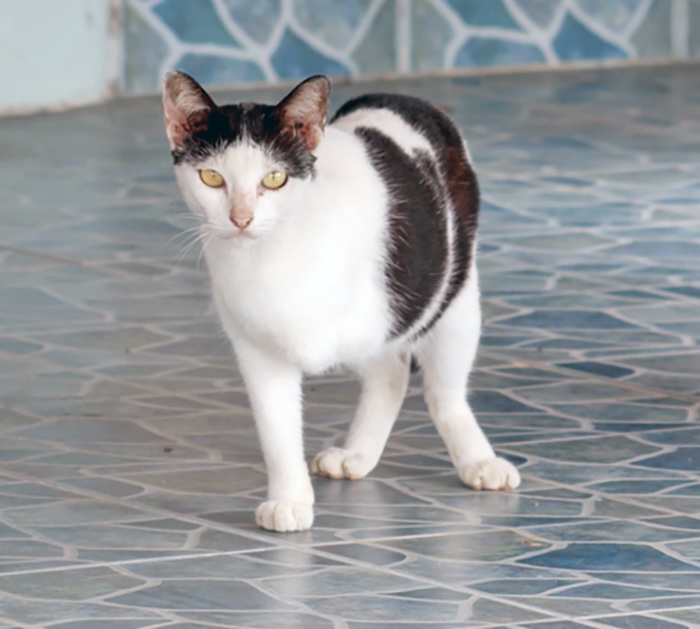
Caring for a disabled cat is a labor of love. Depending on your cat’s issues, it can also be time consuming and possibly expensive.
Some disabilities are so minor that no adjustments really need to be made. For example, a cat missing one eye should be an indoor-only cat but can live a normal life. The same is true for most cats who lose a limb. Three-legged cats may need a few minor adjustments to their environment, but most of them run and jump like their four-legged buddies.
More severe disabilities include blindness, deafness, and partial paralysis. Some of these cats can lead almost normal lives and still have good quality of life despite their handicaps. Disabled cats should be indoor-only cats, but many can enjoy catios outside in good weather.
The Blind Cat
For a blind cat, the biggest adaptation you need to make is to curb any urges to redecorate or move furniture around. Cats will develop mental and scent maps that guide them safely around your home. Shifting furniture, even a few inches, will initially confuse them. Unsafe areas such as stairs should be blocked off unless or until you guide your cat up and down many times to establish the change in footing. Your cat will usually still respond to your calls and chirps.
The Deaf Cat
Deaf cats quickly learn to respond to lights (think of the mini flashlight on a keychain). If your deaf cat is sound asleep, thump the floor or wiggle the bed before you go to pet her or pick her up so she isn’t startled. Cats can also learn hand signals, just like a dog.
Brain Problems
Cats can be born with congenital cerebellar problems or have neurological problems from trauma or clots secondary to conditions like hypertrophic cardiomyopathy. These cats may have an ataxic gait like a drunken stagger or even show partial or total paralysis.
Rehabilitation Help
Christopher W. Frye, DVM, Associate Professor and Section Chief for Sports Medicine and Rehabilitation at the Cornell University’s College of Veterinary Medicine, says rehabilitation is targeted to the specific disease and the functional capacity of the pet, so cats can benefit from physical therapy and rehab modalities.
Cats may exhibit more behavioral intolerance to performing certain exercise therapies or applications of physical agent modalities in the clinic. However, cats will tolerate some physical therapy exercises and can be coaxed into certain activities as part of their daily function like jumping to a spot, walking over low obstacles, completing a reasonable obstacle course that helps with tasks like strengthening, balance, spatial awareness, and range of motion as indicated for their age, physical level, and disease process.
Some cats do tolerate modalities such as therapeutic laser, acupuncture, and even underwater treadmill therapy. These modalities and exercises are ideally prescribed to address the disease the cat has and their current level of function. People are often amazed at what cats can do, and if they have concerns about mobility issues, pain, or want to know if there are rehabilitation options for their pet, Dr. Frye recommends they make an appointment with a board-certified veterinary sports medicine and rehabilitation specialist.
Temporary Disabilities
For some cats, their disability is a temporary condition. With time and dedication, they may return to almost normal activity and gait. Many cats, though, will require some rehab for the rest of their lives. Rehab veterinarians and technicians can teach you to do many of the exercises for your cat at home. Rehab plans need to be customized for the individual cat and her unique condition.
Rehab exercises are designed to maintain or increase range of motion and to improve or maintain muscle strength. It may help to have two people involved: one to offer a “lick stick” with a really delicious treat while the second person performs the manipulations. And, of course, it helps to have a cooperative cat.
Pulsed electro-magnetic field (PEMF) rehab tools require minimal effort by you and include Assisi loops and PEMF beds. These tools can be used at home and can help to provide passive healing and maintenance care.
Make Home Safe
Environmental management is also important for cats with mobility issues. Use nonslip mats and rugs. Pet ramps can allow your cat to get up to her favorite sleeping spots. You may need to raise food and water bowls and set up a litterbox with a low entry.
For cases of permanent loss of function of rear legs, pet wheelchairs are an option. While it may take some training to acclimate a cat to using one of these, many cats will ultimately adapt well to their use.
Some of the most difficult disabled cat cases involve incontinence. Cats who lose bladder function may need you to gently empty their bladders multiple times per day. Veterinary staff can show you how to do this. Cats who leak urine require frequent cleanings of their rear area and any soiled bedding. Some cats will tolerate doggy diapers. These need regular changing as well to prevent sores.
The options for keeping your disabled cat happy and healthy are often only limited by your willingness to find what works for your cat.
PeachLoveU | iStock
Most three-legged cats get along as well as their four-legged friends.
Rehabilitation is targeted to the specific disease and the functional capacity of the pet, so cats can benefit from physical therapy and rehab modalities, says Dr. Chris Frye.


