

Determining whether your cat is anemic (has a lower than normal red blood cell count) requires a simple blood test. Determining the cause, though, can be a bit more challenging.
“For your veterinarian, it goes way beyond whether a cat is anemic or not,” says Lisa Markham, DVM, graduate of Cornell University’s College of Veterinary Medicine and practicing small animal veterinarian in Central New York. “Once the baseline bloodwork is done confirming that your cat is indeed anemic, further diagnostic tests are absolutely necessary to get to the bottom of the situation and treat it appropriately.”
Acute or Chronic?
The first thing to be determined is whether the anemia is acute (started suddenly, recently) or chronic (has been going on for a while). Your cat’s history can help determine acute vs. chronic. For example, a young apparently healthy cat who goes outside and was normal yesterday but today is weak and severely anemic vs. a geriatric cat with chronic kidney disease who has been slowly declining for months. Unfortunately, though, it’s rarely this clear cut.
What Causes Anemia?
Potential causes of acute anemia include trauma with hemorrhage, rupture of an internal organ or tumor, ingestion of certain types of rat poison, infectious agents, toxins, sepsis, heatstroke, and autoimmune disease attacking red blood cells and/or platelets.
Potential causes of chronic anemia include anything that causes chronic slow blood loss (e.g., gastrointestinal ulcers, inflammatory bowel disease, vitamin B12 deficiency, pancreatitis, intestinal parasites, chronic inflammatory urinary tract disease, slow-bleeding tumors, and fleas), chronic use of non-steroidal anti-inflammatory drugs, chronic kidney disease, liver disease, autoimmune disease, and cancer.
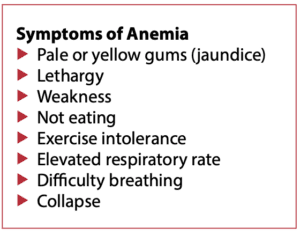
The next thing to be determined is whether the anemia is regenerative (the body is making an appropriate response to replace red blood cells quickly) or non-regenerative (no response or paltry attempt by the body to replace red blood cells). This is an important distinction to make, as it helps pinpoint the cause of the anemia and guides treatment.
Regenerative anemia is usually the result of either excessive blood loss (hemorrhage) or excessive red blood cell destruction (autoimmune disease, infectious agents, toxins). If the underlying issue is diagnosed and resolved, the anemia should go away, since the body can make red blood cells.
Non-regenerative anemia is the result of decreased red blood cell production. Red blood cell production requires healthy bone marrow, normal levels of the hormone erythropoietin (EPO), and adequate iron levels. If the anemia is non-regenerative, one or more of these three things is going wrong. Again, a definitive diagnosis for the cause of the non-regenerative anemia helps guide treatment, such as:
- Iron deficiency, which can be due to blood loss or inflammatory conditions
- Bone marrow disease (infiltration or metastatic bone marrow cancer) or bone marrow suppression (due to infectious agents like FeLV/FIV/FIP or certain medications like chemotherapeutic drugs, methimazole, phenobarbital, estrogens)
- Diminished EPO levels due to CKD (EPO is made in the kidneys), antibodies formed against recombinant EPO therapy (side effect of therapy), and/or chronic inflammatory conditions (inflammatory mediators interfere with EPO production over time)
Diagnostics
Testing begins with complete blood count (CBC), chemistry screen, urinalysis, and fecal testing for parasites. A reticulocyte count will be performed to differentiate regenerative from non-regenerative anemia. Reticulocytes are immature red blood cells that are released at an accelerated rate when anemia is regenerative. Slide agglutination tests are performed to rule in or out autoimmune disease. Red blood cells clump together on the slide when autoantibodies are involved.
Further diagnostics may be recommended and include chest X-rays, abdominal ultrasound, FeLV/FIV test, mycoplasma test, heartworm test, iron level test, and bone marrow biopsy.
Treating Anemia
If the anemia is severe, your cat may require a blood transfusion. If your cat has immune-mediated hemolytic anemia (IMHA), immunosuppressive medications like prednisolone or mycophenylate will likely be prescribed. If your cat has non-regenerative anemia due to CKD, darbopoeitin (a medication that mimics the action of EPO) or molidustat (a medication that stimulates increased production of EPO) may be prescribed. If your cat has mycoplasma, an antibiotic like doxycycline or azithromycin will be prescribed.
The prognosis for cats with anemia varies tremendously depending on underlying cause, severity, and duration of the anemia.


