
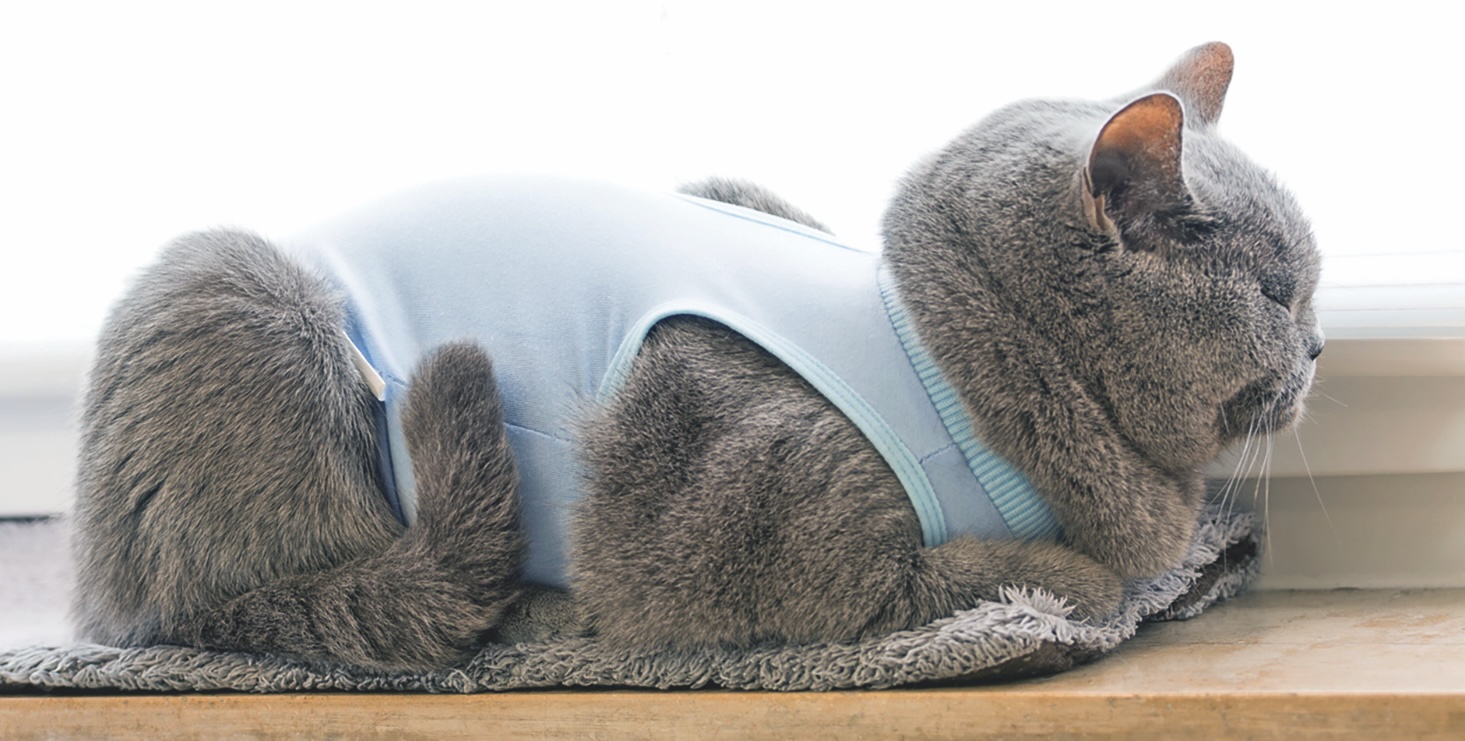
Your cat recently had surgery and all went well. But before she even returns home, you need to establish a quiet, safe place for her to recover. If she is crate-trained, use a large dog crate. Set it up with food, water, litterbox, and a bed. Alternatively, you can arrange a small room for your cat’s recuperation.
Put comfortable bedding in the confinement area. It is best if it is waterproof or absorbent, as your cat may not be fully continent the first day or so post-op. Discuss with your veterinarian whether your cat needs special litter after her surgery. Shredded newspaper tends to be dust-free and non-irritating.
Protect the Incision
You do not want the incision opening, so you must prevent your cat from licking or chewing on the surgical wound.
The classic way to protect an incision is a stiff plastic collar called an Elizabethan collar. It’s usually what your cat will come home from the hospital with. A soft fabric version of the Elizabethan cone may be a bit more comfortable, but not much.
Better options include a stiff neck cone, soft donut, or a bodysuit that covers the surgical area. Called “surgical suits,” these are far more comfortable for your cat. They can be purchased or you may be able to make one at home using a small T-shirt or baby onesie. If you make it yourself, you must be certain your cat cannot access the stitches.
Frankly, though, you still have to watch your cat. Remember how flexible and determined she is! If she can get to the stitches, she will!
Keep Your Cat Quiet
You can assume that it will take at least 24 hours for your cat to return to some sense of normalcy. Some cats, such as a young male who has been neutered, will usually recover quickly, but older cats often take longer to fully clear the anesthetic and pain medications from their bodies and get their neurologic status back to full function. Watch that they don’t attempt to climb, leap, or run until their incision has a chance to heal.
Keep your cat separated from other pets unless you are right there. She will have a different smell due to her stay at the veterinary clinic. Other pets may hiss, swat, or growl at your cat when she first comes home. Until she is fully awake, your cat may react to your other pets as if they are unfamiliar as well.
Eating and drinking are important. Unless otherwise advised, stick to your cat’s normal diet, but you may need to warm the food or add some warm water to increase enticing smells. A small, tasty topper, such as the juice from a can of tuna, may also help to get your cat back to eating. Check to be sure there are no dietary restrictions. Cats who have had dental surgeries may have specific recommendations for their meals after these procedures.
Make sure there is plenty of fresh, cool water that your cat can easily access. The veterinary team may send home some fluids to be given subcutaneously to keep hydration up. Follow directions exactly. Don’t hesitate to contact the veterinary staff if your cat does not eat.
Medications
Your cat may come home with pain meds, sedation drugs, or antibiotics. Always read the instructions about dosing carefully, and check with the veterinary staff if you have any questions or difficulty with the schedule. If your cat is difficult to medicate, ask about methods like using a food paste such as Churu to sneak pills into your cat or the use of liquid or transdermal drugs.
Certain surgeries will have very specific follow-up care. Follow the schedule as best you can, or plan to arrange for hospitalization for an extra day or two if you can’t be there all day.
Orthopedic surgeries will have rehabilitation exercises to start at a set time post-op. Do not skip these! Be sure you clearly understand how to perform these exercises to avoid causing damage.
Luckily, most cats come through even complicated surgeries in good shape and go on to heal without complications.


