
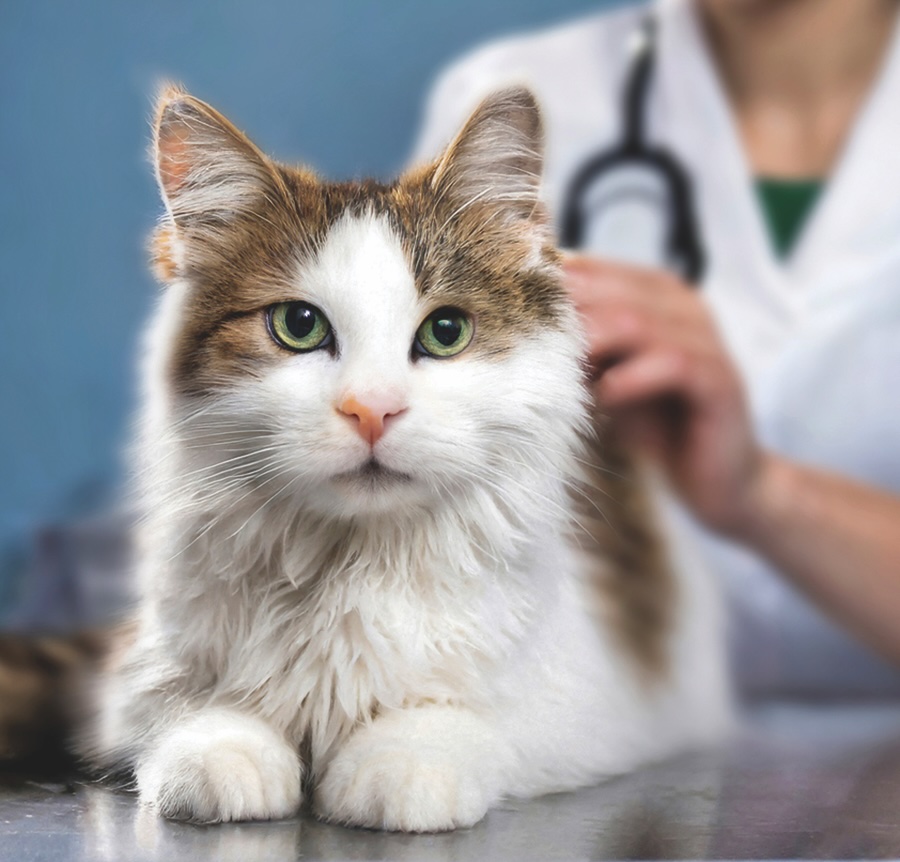
Some veterinary clinics are certified as “cat friendly” through a program offered by the Feline Veterinary Medical Association.
Being cat friendly starts with the waiting room. Cat-aware practices try to provide a separate area for cats. Clean covers may be provided for carriers. Feline pheromone diffusers may add to a calming atmosphere. Quiet “elevator music” is used.
If possible, an exam room is designated for cats only. The examining table has a nonslip cover like a yoga mat that can be easily disinfected between visits. Accessible perches or hiding places are often created. A feline pheromone diffuser is running. A bed with high sides or a basket can provide a way for your cat to feel secure yet allows veterinary staff access for an exam. The room will have towels or small blankets for use in restraint if need be. Tasty cat treats such as Churu paste are available.
Most veterinary hospitals have a special area just for cats in case your cat needs to stay over. This ward will be quieter (no barking dogs!).
Just as important as the physical accommodations for cats, the veterinary practice should have staff who genuinely enjoy cats and working with cats. A scared cat will relax at least a little in the presence of a calm, caring staff member.
The official Cat Friendly Practice program has a certification process for veterinary practice. There are multiple levels of certification ranging from the minimum to the ideal cat veterinary practice. Some of these practices may be feline only, but others combine care with dogs or exotic pets.
A shy, anxious cat will most likely do best in a clinic that caters to cats. You can find a listing of cat friendly practices and specific information about the program at catvets.com/cat-friendly/certificate-program/.


