
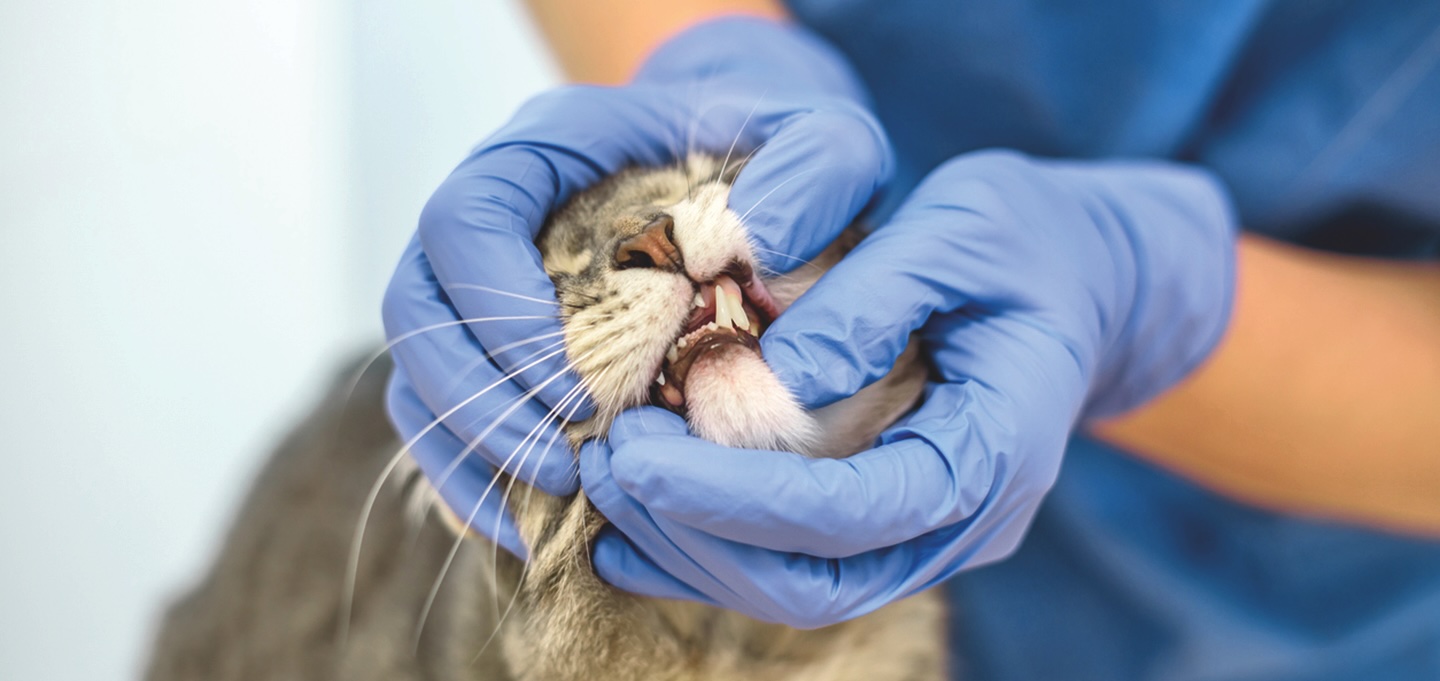
Q: I had a squamous cell carcinoma debulked from my cat’s whisker pad in March, and it’s coming back because they couldn’t get clear margins due to its location against her nose. I’m told that radiation and chemo will still only extend her life just a little bit. Is there not any cure? And are there holistic options?
A: Thanks for getting in touch, and I am very sorry to hear of your cat’s diagnosis of oral squamous cell carcinoma (OSCC). OSCC is the most commonly diagnosed cancer of the oral cavity in cats, and while ongoing studies (including some funded by the Cornell Feline Health Center) continue to provide vital insights into this dreadful disease, therapeutic options are currently somewhat limited, and outcomes are not as good as we would prefer.
Perhaps a brief review of feline OSCC and what we know about current treatment options would be helpful.
OSCC arises from abnormal growth of epithelial cells that line the tongue, cheeks, and palate, and comprises about 80% of all oral cancers diagnosed in cats. The average age of cats diagnosed with OSCC is 12.5 yrs, and, sadly, the median survival time of untreated cats is between 44 and 60 days, with 90% of cats diagnosed succumbing to this disease within one year of diagnosis if not treated.
Cats that undergo surgical excision of OSCCs (currently the best treatment option if feasible depending upon tumor location and invasiveness) do notably better, with only 20% of these cases succumbing to their disease within one year of diagnosis and an improved median survival time of 420 days. The addition of radiation therapy after surgery slightly improves outcomes (10% of cats that undergo this therapeutic strategy succumb to their disease within one year of diagnosis), but many cats that receive adjunctive radiation therapy after surgery experience side-effects that negatively impacts quality of life.
Certain accelerated radiation therapy protocols combined with a chemotherapy drug called cisplatin prolonged median survival time to 163 days in one study, and the addition of chemotherapy to the combination of surgery and radiation therapy does not appear to improve survival in cats diagnosed with OSCC.
Unfortunately, I am not aware of any “cures” for OSCC in cats, and I am similarly unaware of any holistic treatments that have been shown to improve outcomes in cats diagnosed with this dreadful form of cancer.
We are hopeful that ongoing studies investigating the genetic, environmental, and (potentially) infectious contributors to the development of feline OSCC will shed light on new effective treatment options. Until then, it is important that you work closely with your veterinarian (and, perhaps, a veterinary oncologist) to devise the best treatment plan for your kitty’s individual case.
Best regards from all of us here at the Cornell Feline Health Center, and please send an update when you can.


