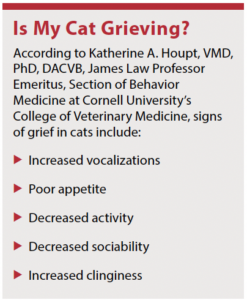
We know that cats can grieve a feline friend who has passed away. Some cats don’t miss a beat, others may seem sad for a day or two and then recover, and others may mourn dramatically. By the same token, some cats desperately need and want a new feline companion while others will be happy as the only cat in a home.
Feline social behavior is complex. Cats can thrive living in large groups, but many thrive as solitary beings. They also tend to be particular about their company. A cat may be strongly attached to one cat but disinterested in or even aggressive toward other cats. Before deciding to get your cat a new companion, you will need to untangle your cat’s relationship with your deceased cat and his feelings toward and experiences with other cats beyond his previous companion.
Were They Actually Friends?
This isn’t always a fun or easy question to answer, but it is important. Think about how your cats interacted over the course of their time together and be honest.
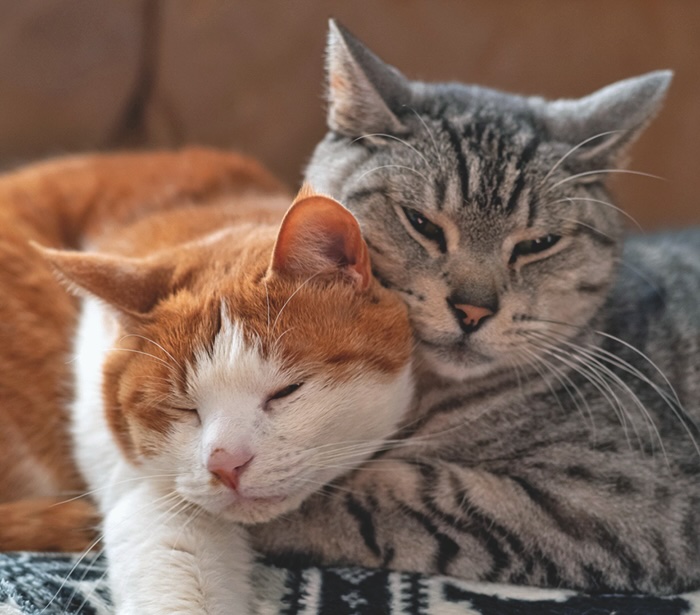
On one end of the spectrum, we have true bonded pairs of cats. These cats groom each other, play together, and often even sleep together. They are frequently in the same space and spend lots of time together. There are little to no signs of hostility between them and they share resources willingly.
On the other end of the spectrum, we have mortal enemies. These cats want nothing to do with each other and frequently fight. You can probably identify each of them by their hiss or growl, and have set up separate food, water, and litterbox stations for them. If one cat enters a room, the other leaves.
Most feline pairs fall somewhere in the middle. The true center of the spectrum is neutrality. These cats tolerate each other’s company and share resources, but don’t directly interact. Each cat has his own routines and activities. They probably don’t fight often simply because they don’t spend time together.
In general, cats who disliked or just tolerated their feline housemate are often perfectly happy transitioning to being the only cat in your home. Cats who had frequent positive interactions with the deceased cat are more likely to welcome a new addition.
Experience with Other Cats
Consider whether your cat has interacted with other cats besides the one who just passed away. This can help you determine if your cat truly enjoys the company of other cats, or if he just liked that particular cat.
Think about your cat’s history before joining your family. Did you pick him out straight from a litter as a kitten, or was he older? If a kitten with a friendly mother, did he stay with his mother and siblings for 10 to 12 weeks to ensure optimal feline socialization? If a kitten from a feral colony, was he kept with his siblings or mixed in with other kittens during this time? For an adult cat, was he the only cat in his previous home, or did he coexist peacefully with other cats?
Also think about any time your cat has met or seen other cats during his life. This might have been while staying at a boarding kennel, visiting friends or family, or viewing other cats through the window. Was your cat curious about the stranger, cautious, or aggressive?
Cats who respond to the sight or smell of an unfamiliar cat with aggression likely do not want a new feline companion. Cats who are extremely fearful of unfamiliar cats also probably don’t want or need a new friend.
Curious, friendly, cautious, and neutral cats are more likely to accept a new feline family member. But there is still the question of whether your cat truly enjoys feline companionship, or if he just clicked with one cat.
Finding “Meowster” Right
If you do decide to add a second cat, try to choose a cat who will be a good match for your current cat. Think about the personality traits that your cat likes or dislikes in feline companions.
Kittens are often too boisterous and pushy for older cats, especially if your adult cat is shyer or reserved. Kittens and adolescent cats may play rough or fail to respect personal space, which can cause the older cat to become withdrawn or even aggressive toward the newcomer. If your cat has not really been around other cats outside the family, look for a companion cat who is friendly but calm.
Take all introductions slowly. Start by allowing the cats to smell each other but not interact directly (by initially keeping the new cat in a separate room with its own food/water bowls and litter box, for example). As they both become more relaxed, gradually allow them to be closer together on their own terms. This process may take days or even weeks depending on the personalities involved.
It Is OK to Get a Cat for You
Sometimes even if your cat doesn’t want another cat in the family, you do! In these situations, it is extremely important to select a new cat who will be compatible with your current cat. They don’t have to be friends, but they do need to be able to coexist peacefully.
Remember that some cats will never accept a new feline in the house. Keep this in the back of your mind as you introduce new family members.