
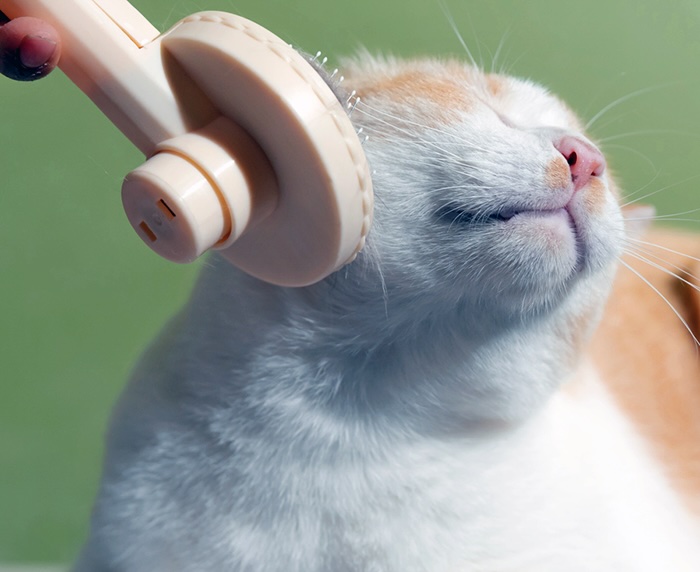
Cats are normally fastidious groomers and, for the most part, keep themselves clean and well-groomed without much help from you. However, because the nature of their fur and undercoat makes them prone to matting, it’s important to check in frequently and lend a hand when needed. Remember, it’s not just long-haired cats that get matted fur. Short-haired cats get mats, too.
High-Risk Kitties
There are situations that warrant even greater vigilance. Obese cats typically cannot groom themselves well, especially their back halves, because it’s too difficult for them to get into and maintain the positions necessary for effective grooming. The same goes for older cats who suffer from chronic pain from things like arthritis. Cats with painful disorders in their mouths, like advanced dental disease, are also less likely to groom themselves well.
Mats are a health and quality-of-life concern for cats. They tend to build up and tighten over time, resulting in discomfort, pulling, and irritation of the underlying skin. The irritated underlying skin can become infected due to trapped moisture and bacterial invasion. When checking your cat for mats, be sure to check behind the ears, in the armpits and groin areas, the belly, and the perineum (area between the anus and external genitalia). Short-haired cats often form mats on their topline as well.
Removing Mats
If you have found mats on your cat, it’s time to get to work. Be sure the fur is dry before attempting to remove a mat. You are best off starting with a wide-toothed metal comb to gently begin to loosen the mat. Slide the comb gently under the base of the mat near the skin, keeping the tines parallel to the skin. While holding the surrounding skin taught, so you are not pulling/stretching the skin while working at the mat, gently rotate the comb a quarter turn at a time, slowly freeing the base of the mat from the skin surface. Continue this process until the mat pulls free.
 Allow your cat breaks as needed during this process. If it seems to cause too much discomfort for your cat, talk to your veterinarian about whether a prescription for gabapentin, which is both calming and pain-relieving for cats, might be in order.
If you have loosened the mat away from the skin but cannot get it removed, it is usually safe at this point to use grooming clippers to finish the job. When purchasing grooming clippers, look for cordless, rechargeable clippers with a quiet motor. Be especially careful using clippers on geriatric cats. Their skin can be fragile and can be injured by clipping.
If you and your cat have survived a de-matting session relatively unscathed, congratulations! Your next mission is to do everything you can to avoid ever having to do that again. Brushing/combing your cat daily goes a long way toward achieving this goal. It also allows you to check for any tiny new mats and remove them before they become a big problem. Establishing a daily brushing routine will make you both feel better. A well-groomed cat is a happy cat.


