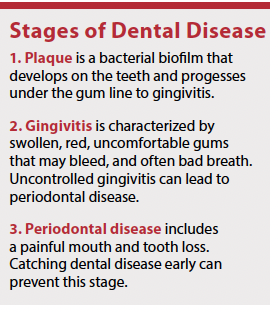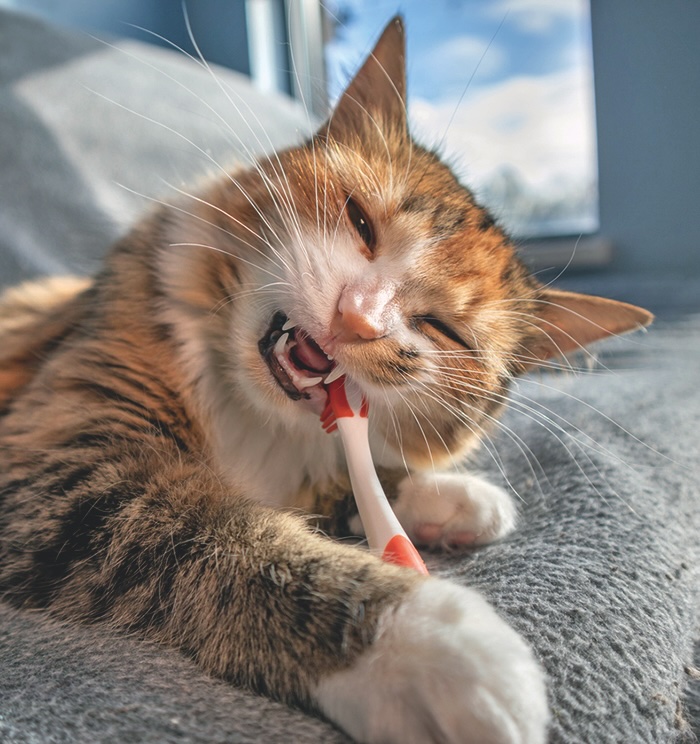
The goal of a home dental-care program is to remove the plaque on a regular basis before it gets up under the gums and starts causing pain and disease. “Cats often hide signs of oral pain,” says Matthew Drozd, DVM, Dentistry and Oral Surgery Resident at Cornell University’s College of Veterinary Medicine.
“Dental care in cats can be challenging because daily toothbrushing—the gold standard for plaque control—is not always well tolerated,” says Dr. Drozd.
“Awake oral examinations (which your veterinarian performs each time you bring your cat in) may identify gingivitis, periodontal disease, tooth resorption, or fractured teeth, but they cannot replace dental radiographs. Many abnormalities occur below the gum line, so a comprehensive anesthetized examination with radiographs and periodontal probing is needed to fully assess and treat dental disease,” says Dr. Drozd.
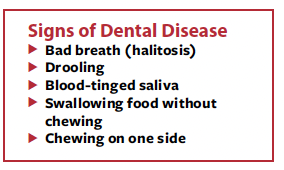 Prevention should start early in life. For kittens, it is fine to wait until all their adult teeth are in, of course, but remember that dental disease starts in young cats, so don’t let it slip by you. If you have adopted an older cat, have your veterinarian assess your lucky kitty’s current dental status.
If painful disease is already present, your cat will likely need a dental procedure under anesthesia. This is called a Comprehensive Oral Health Assessment and Treatment (COHAT). Once your cat’s mouth has been treated and has had time to heal, your home dental-care program should begin.
Dental Products to Help
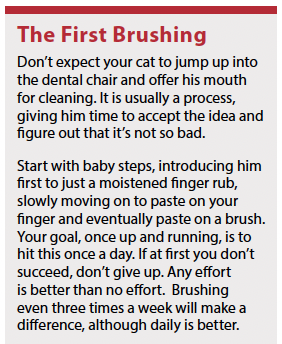
While there is a vast array of commercial veterinary dental care products out there, daily tooth brushing is the best, as Dr. Drozd said. This, when performed properly, has proven to be the most effective approach to maintaining good oral health for your cat.
You must use veterinary toothpaste. Human toothpaste often contains fluoride, which is toxic to pets. We humans brush, rinse, and spit our toothpaste out, while pets ingest toothpaste.
Choose a veterinary paste for cats that contains enzymes. The enzymes work to break down plaque. Different flavors are available, so experiment, as this may make the whole undertaking a little easier.
When brushing, be sure to address the outside surface of every tooth, top and bottom. Fortunately, the cat’s tongue appears to do the work for you on the inner surfaces of the teeth, so no need to attempt to clean there. Toothbrushes made specifically for cats are the easiest to use and fit the best between the cheek and gum of cats. They have smaller heads with shorter bristles when compared to dog or general “pet” brushes.
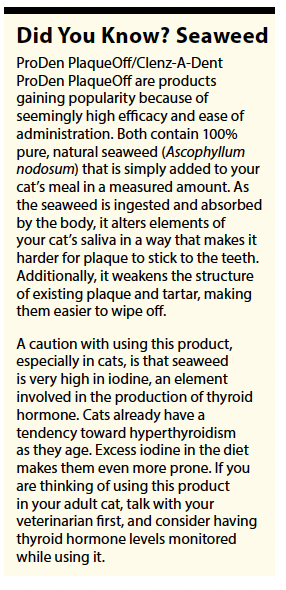
If, despite your best attempts, daily tooth brushing is not happening, it’s time to look at other approaches. There are many commercial products that help inhibit plaque formation, like diets (e.g., Hill’s T/D), food additives (e.g., ProDen Plaque-Off), enzymatic chews/treats, water additives, topical gels, and sprays. With the myriad products out there, the problem becomes which to choose? And how do I know if it is safe, or if it even works?
 Consult the VOHC
This is where the Veterinary Oral Health Council (VOHC) comes in. This program was developed to help pet owners choose products with proven safety and efficacy track records. Companies must submit their products for review, along with scientific studies supporting their claims. Submissions are reviewed by VOHC members.
Those that meet VOHC approval are then forwarded to the Board of Directors of the American Veterinary Dental College for final approval. Products that make it through this process are assigned the VOHC Seal of Approval, which is proudly displayed on their merchandise, making it easier for you to make good choices for your cat.
Remember, dental disease in cats is common, painful, and progressive. Home dental care is an important component of preventing dental disease in your cat, as are regular veterinary exams and COHATs as recommended by your veterinarian.
“Dental products may help control plaque, but none prevent all dental disease,” says Dr. Drozd. “Work with your veterinarian to develop the best dental-care plan for your cat or contact Cornell’s Dentistry and Oral Surgery Service for consultation and treatment.”ν
Some cats may be more interested in a toothbrush than others.