

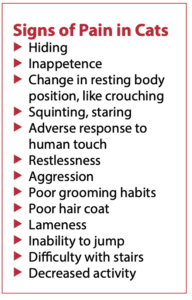
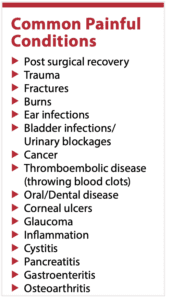
Cats experience pain just like any mammal, but they are adept at hiding it. This means we must watch for subtle signs of pain by being carefully observant of our cats’ behaviors and must advocate for them when they are diagnosed with disorders known to be painful whether they are showing signs or not.
“Pain management is critically important for recovery from surgery or illness,” says Jordyn Boesch, DVM, PhD, ACVAA, Associate Professor in the Section of Anesthesiology and Pain Management at Cornell University’s College of Veterinary Medicine. “However, pain is often undertreated in cats because they are less likely to display behavioral signs of pain that are recognizable to people and because less in known about treating pain in cats compared to people or dogs.”
Managing your cat’s pain depends on the diagnosis, the severity of the pain, and whether the condition is acute or chronic. For surgical pain, opioid medications like buprenorphine, hydromorphone, and even fentanyl may be used while they are hospitalized. These will often be combined with a non-steroidal anti-inflammatory drug (NSAID) like meloxicam or robenacoxib. These can all be given by injection in the hospital.
Post-op pain management at home may include NSAID and gabapentin, a neuropathic pain reliever that works well in cats. Depending on the severity of post-op pain, buprenorphine by mouth may be added.
For chronic pain, such as osteoarthritis (OA), an NSAID may be prescribed. No NSAID is FDA-approved for long-term use in cats, however, so your veterinarian will have a conversation with you regarding extra-label use of medications. “Chronic NSAID administration can be safe in cats for OA, but lower doses should be used, and the cat must be monitored with extreme caution,” says Dr. Boesch.
Other options for the chronic pain of OA in cats include gabapentin, tramadol (an opioid medication), amantadine (a pain perception blocking medication), frunevetmab (an injectable monoclonal antibody that blocks OA pain perception), acupuncture, laser therapy, and physical therapy.
For chronic soft tissue or visceral (internal organ) pain that may occur with chronic pancreatitis or cancer, commonly prescribed medications include gabapentin, NSAIDs, opioids, amantadine, and/or maropitant.
You may be familiar with maropitant (Cerenia) as an anti-vomiting medication, but it also relieves pain by blocking Substance P, a neurotransmitter that is heavily involved in the perception of pain. This dual action makes it especially useful for managing chronic pancreatitis, as it both controls vomiting and provides pain relief.
Other oral pain medications like tramadol and buprenorphine can be added to maropitant therapy for feline pancreatitis patients as needed.
Remember that there are no safe over-the-counter pain medications for cats, so if you think your cat may be in pain, schedule a veterinary appointment.
Don’t ignore signs your cat may be in pain. Your veterinarian can assess your cat’s condition and prescribe safe, effective and appropriate treatment for pain.


